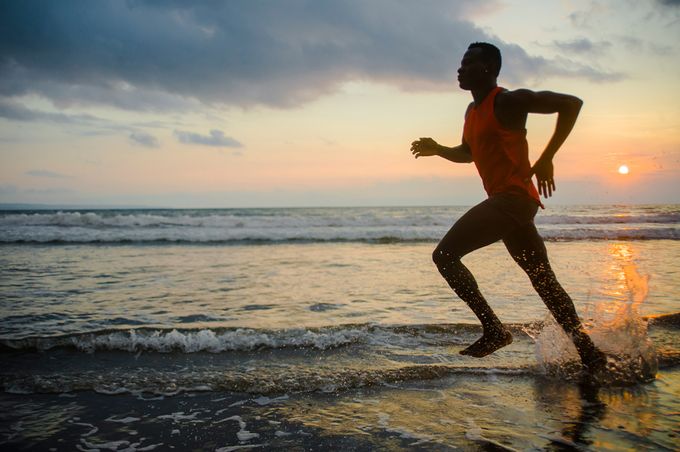




Running is an excellent form of aerobic exercise with a proven range of health benefits. It strengthens muscles, improves cardiovascular fitness, and boosts mental health. Inceased physical activity has been linked to higher longevity and running for even 5 to 10 min/day and at slow speeds of less than 6 miles per hour can reduce the risk of death from all causes.
But have you considered running without shoes? Welcome to the world of barefoot or "natural" running, a primitive form of exercise that has gained popularity due to its perceived benefits and potential to transform your fitness journey. The purported benefits include improving strength and balance, as well as resolving knee, back, and hip pain.
Here’s what you need to know about barefoot running.
Benefits of Barefoot Running
Some possible benefits of barefoot running include:
- Stabilizing flat feet: While height of the arch isn't relevant for running, running without shoes may strengthen foot muscles and increase flexibility, countering the impact of flat arches, thus stabilizing a flat foot . However, if your feet hurt while running or you feel a lack of balance, you should continue running with your shoes on.
- Burning more calories: Running is a great form of aerobic exercise and helps to burn calories. But shoes do not help you propel forward and cannot replicate barefoot running in stride frequency, stride length, etc. The lack of cushioning support in barefoot running makes it more demanding, requiring extra energy and muscle activation. This could result in burning more calories compared to running with shoes.
- Reducing the risk of plantar fasciitis: Barefoot running may reduce the risk of plantar fasciitis, a common runner's ailment. The practice encourages a more natural running style and a forefoot strike, potentially reducing the impact on the plantar fascia. It can also help you develop a better running technique as it encourages a more natural running style and a forefoot strike instead of a heel strike.
Did You Know?
According to WHO, physical inactivity accounts for 6% of premature deaths globally.
» Check out the best insoles for long-distance running
Risks of Barefoot Running
While it does have its benefits, barefoot running isn't without risk.
- Damaged foot pad: With ageing, the protective layers of tissue in the balls and heels of the feet degrade. Running barefoot can potentially damage the foot pad, a thick layer of skin on the bottom of the feet, causing fat pad atrophy.
- Foot abrasions: Running barefoot exposes your feet to a higher risk of abrasions, foreign bodies, and other injuries. The protective cushioning provided by shoes is absent, increasing the potential for damage.
- Foot injuries: The loss of the foot pad's shock-absorbing properties can lead to long-term injury and even chronic pain. Blisters and foreign bodies are common in barefoot running. Your ankle could roll, which can also lead to a sprain, rupture, or metatarsal fractures. If you do choose to run barefoot, you should be aware of the terrain and risk of foot injuries.
Can You Run Barefoot on a Treadmill?
While technically possible, running barefoot on a treadmill is generally not recommended. The friction generated between your feet and the moving belt can lead to abrasions or blisters. Moreover, your toes risk getting caught between the treadmill's moving and stationary parts, potentially leading to injury.
Barefoot Running vs Running with Shoes on
Regardless of the chosen foot attire, running is a high-impact sport with its own set of injury risks. However, wearing shoes can offer protection against foreign bodies and cuts while managing the repetitive loads placed on the musculoskeletal system, potentially preventing injuries.
For those seeking a middle ground, there's an emerging solution: barefoot shoes.
Best of Both Worlds
So what are barefoot shoes?
Barefoot shoes or "natural foot-shapers" have thin soles, allowing wearers to feel the ground while providing some protection. They are popular for replicating the barefoot running experience but without the attendant risk. They can improve joint pressure distribution, enhance the ankle's range of motion, and promote a natural gait pattern.
However, barefoot shoes aren't recommended for individuals with certain conditions, like diabetic neuropathy, due to decreased foot sensitivity.
» Learn how to read your shoe wear pattern
Unshod Yet Unscarred
Barefoot running offers an intriguing mix of potential benefits and risks. If you're considering this practice, thorough research is crucial. Be aware of your surroundings and terrain while running and consider the use of insoles or barefoot shoes to mitigate some risks. Ultimately, it's about finding a balance that suits your individual needs and running style. Safe running!